
● Learning at home
How to build a study routine that fits your family
To build a study routine, agree on a manageable moment, choose one clear task and finish with a short reflection. Adjust the routine around your family's day and your child's needs.
You can begin with a notebook and a conversation. The aim is to make the next step clear enough for your child to take part in planning it.
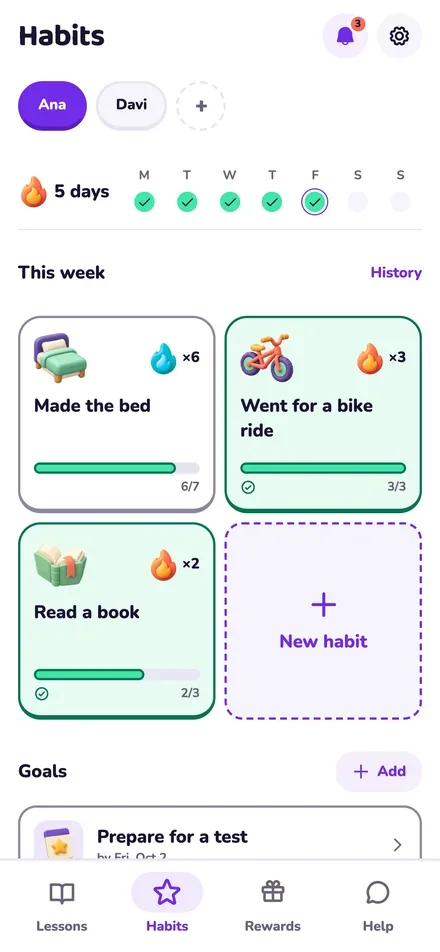

 One small step, together.
1. Choose a moment you can realistically protect
Look at the day together. When is your child likely to have enough energy to think? What needs to happen around meals, travel, rest or caring responsibilities? Choose a starting point you can try, with room to change it.
The Education Endowment Foundation's guidance describes how families can support learning through routines and managing time, effort and emotions. It also notes mixed results from parental engagement interventions, so treat your first plan as something to learn from.
Sources: Education Endowment Foundation: Working with Parents to Support Children's Learning
2. Turn study time into one understandable task
Replace a broad instruction such as study science with a concrete task: explain how a seed grows, label a diagram from memory or work through a problem from class. Ask your child to describe the task in their own words.
If the school has set homework, begin with those instructions. Write down any uncertainty instead of guessing what the teacher expects.
3. Leave room for an independent attempt
Ask, What will you try first? Then give your child space to begin. Stay available for a question or a prompt, such as pointing them back to an example they already know.
If they remain stuck, agree on a next step together. That might mean breaking the task into a smaller part or noting a question for the teacher. Persistent difficulty is useful information to share with the school.
4. Revisit an idea on another occasion
After your child has studied something, return to it later with a question: What can you remember about yesterday's diagram? Let them try before checking their notes together.
The Institute of Education Sciences recommends spacing study and using quizzes to revisit important content. The guide supports these learning principles, but it does not prescribe one interval or a family timetable that works for everyone.
Sources: Institute of Education Sciences: Organizing Instruction and Study to Improve Student Learning
5. Finish with a short reflection
Ask what became clearer, what still feels difficult and what they would try next time. Notice a specific action, such as checking a mistake or explaining a new approach.
For example, a child might explain a story's main idea, identify one detail they forgot and choose to revisit it later. The conversation gives both of you a useful starting point for the next session.
6. Keep the routine open to change
After trying the routine, ask whether the task, setting and amount of support were manageable. Change one part if needed. A missed session is a reason to review the plan together.
Keep working with your child's teacher when a learning difficulty or workload needs closer attention. Bring a specific example of what your child tried and where they needed support.
Keep exploring
Sources and further reading
- Education Endowment Foundation: Working with Parents to Support Children's Learning
- Institute of Education Sciences: Organizing Instruction and Study to Improve Student Learning
Prepared by Gamefik with AI assistance. The sources linked above informed the guide and were checked during preparation.